Over the last several months, the tech industry has been hit by a severe global memory shortage, and the effects are now spilling directly into the PC and laptop market. If you’ve noticed higher prices, fewer configuration options, or delayed availability, you’re not imagining it. Industry analysts warn that the situation is unlikely to improve anytime soon and may continue to worsen through 2026. Here’s what’s happening — and why now is the time to buy before prices climb even higher.
What’s Causing the RAM Shortage?
AI Is Consuming a Massive Portion of Global Memory Supply
Demand for computer memory has surged because modern AI data centers require enormous amounts of it to train and run AI models. These facilities rely on many of the same types of memory used in everyday computers, including DRAM, NAND, and newer high‑bandwidth memory. As AI companies lock in huge volumes of supply, there is less available for the consumer market, which continues to push prices upward.
Manufacturers are shifting more of their production capacity toward these higher‑margin AI‑focused components, reducing the output of the standard RAM and storage used in PCs and laptops. Analysts report that DRAM prices surged in late 2025 as AI workloads outpaced available supply, and with AI data centers projected to consume 70 percent of all high‑end DRAM production in 2026, the strain on availability is expected to intensify.
Structural Reallocation of Production Is Leaving PCs Behind
This is not a temporary disruption like the chip shortage seen in 2020–2023. Instead, it is a broader and longer-term shift in how memory manufacturers allocate their resources. Companies such as Samsung, SK Hynix, and Micron are increasingly prioritizing enterprise‑grade AI memory over the consumer-grade DRAM and SSDs used in everyday systems. By late 2025, wafer capacity was being aggressively redirected to high-bandwidth memory production, tightening supply even further. Between 2024 and 2026, this shift helped drive a staggering 200–400 percent increase in the price of DRAM and NAND.
How This Impacts PC and Laptop Buyers
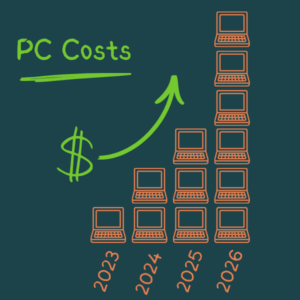
PC Prices Are Rising — And Could Increase Up to 20 Percent
Major manufacturers, including Lenovo, Dell, HP, Acer, and ASUS, have already warned of significant price hikes heading into 2026. PC makers have confirmed 15–20 percent cost increases driven by RAM and SSD shortages, and to offset these rising component costs, some vendors are preparing to lower the standard RAM included in certain laptop models.
Fewer Budget Options and Leaner Specs
With memory becoming more expensive and more difficult to secure, manufacturers are shifting their product lines toward higher‑margin premium systems. This results in fewer affordable models and tighter configuration choices for consumers. Analysts warn that shortages will push PC vendors to focus on higher‑end, pricier products, reducing the availability of budget-friendly options.
The Market Could Shrink Before It Stabilizes
IDC projects that PC shipments may decline sharply in 2026 as the shortage deepens. Current forecasts estimate a contraction of 5 to 9 percent next year, reflecting both higher prices and constrained supply.
In short, supply is tight, costs are rising, and the industry is signaling a challenging year ahead.
Should You Buy Now?
Given the direction of the supply chain, analysts agree that the shortage is likely to worsen before it improves. PC shipments surged late in 2025 as buyers moved quickly to secure systems before further price increases expected in 2026. At the same time, TrendForce expects memory prices to rise another 70 percent in 2026, adding further pressure to hardware costs across the board.
If your organization has aging hardware, upcoming staffing changes, or any planned refresh cycles, delaying purchases could result in higher prices, fewer configuration choices, longer wait times, or lower‑spec systems replacing midrange options.
Our Recommendation
If you anticipate needing new PCs, laptops, or upgrades in the next six to twelve months, now is the time to plan and place orders. Prices are unlikely to drop in the near term, and supply constraints will likely become even more challenging as AI infrastructure continues absorbing a large share of global memory production.
Ashton Solutions can help you review current inventory, assess your upcoming needs for 2026, identify which systems to prioritize before prices increase further, and explore bulk purchasing options to lock in pricing now.